
Why Lawns Struggle After Winter in Fergus
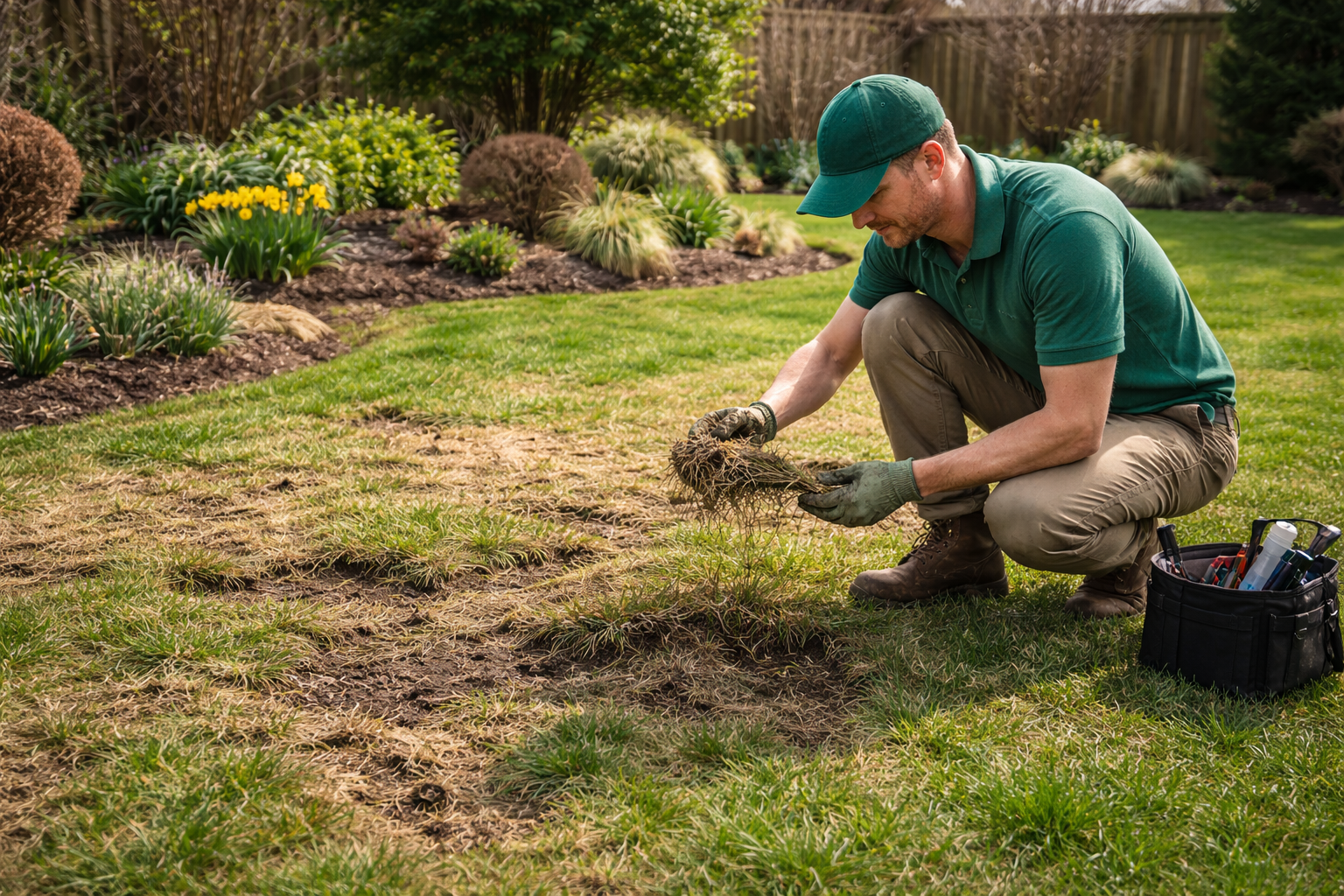
Winter conditions in Fergus can be demanding on residential lawns. Snow accumulation, fluctuating temperatures, and repeated freeze thaw cycles place stress on turfgrass and soil structure. By the time snow melts, many lawns begin the season weaker than they appear.
Snow mold is one of the most common issues. This fungal condition develops under snow cover and becomes visible once the snow recedes. It often appears as circular patches of flattened or greyish grass that struggle to recover in early spring.
Soil compaction is another factor. The weight of snow and ice compresses the soil surface during winter months. When soil becomes compacted, grass roots receive less oxygen and water movement through the ground slows down.
Freeze thaw cycles also disrupt the soil structure. As moisture expands and contracts with temperature changes, the ground shifts slightly. These changes can weaken root systems and create uneven growth patterns across the lawn.
Understanding these seasonal pressures helps explain why early spring lawn care Fergus services are often necessary to restore healthy turf before the growing season begins.
Sign 1: Thin or Patchy Grass
Thin or patchy grass is one of the clearest signs that a lawn needs attention after winter.
Cold temperatures and prolonged snow cover can weaken turf, leaving certain sections slow to recover. In some cases, winter damage kills portions of grass completely, resulting in bare areas once the snow melts.
Compacted soil can worsen the problem. When soil is compressed, grass roots struggle to expand and absorb nutrients. Even if grass begins to grow again in spring, the root system may remain weak.
Patchy lawns are more than a cosmetic issue. Thin areas provide space for weeds to establish themselves quickly once temperatures rise. Over time, these weeds compete with grass for sunlight, water, and nutrients.
Early lawn evaluation can help determine whether aeration, overseeding, or soil treatments are needed to restore turf density.
Sign 2: Excess Weeds Appearing Early
Weeds appearing early in the season often indicate that the lawn is struggling to maintain strong coverage.
Healthy grass typically prevents weeds from spreading by forming dense growth that blocks sunlight from reaching weed seeds. When the turf becomes thin or stressed, weeds gain the opportunity to grow.
In Fergus lawns, early season weeds often include dandelions, chickweed, and plantain. These species thrive in areas where soil conditions are uneven or grass coverage is weak.
Weeds can spread quickly if underlying lawn health issues are not addressed. Simply removing visible weeds rarely solves the problem long term. Instead, improving soil quality and turf density helps the lawn naturally compete against unwanted plants.
Weed pressure also affects nearby planting areas. Managing weeds and soil conditions across the entire yard often involves coordinated maintenance, including professional garden care services that address both lawns and surrounding beds.
Sign 3: Yellow or Discoloured Grass
Discoloured grass is another early signal that a lawn may require professional attention.
Grass that appears yellow, pale green, or uneven in colour often reflects nutrient deficiencies or soil imbalances. Winter precipitation can wash nutrients deeper into the soil, leaving the upper root zone depleted.
Drainage problems may also contribute to discolouration. When water remains trapped in the soil after snow melt, grass roots can struggle to access oxygen. This stress often results in dull or uneven turf colour.
In some cases, discolouration appears in irregular patterns across the lawn. These variations may indicate differences in soil composition or areas where winter damage affected root health.
Professional lawn care programs often address these issues through balanced fertilization and soil improvement strategies designed to support healthy turf recovery.
Sign 4: Hard or Compacted Soil
Many homeowners notice that their lawn feels firm or difficult to penetrate after winter. This condition often signals soil compaction.
Compacted soil prevents proper movement of air, water, and nutrients. Grass roots remain shallow and cannot spread effectively through the soil profile. As a result, the lawn may appear weak even if grass blades are present.
Compaction often occurs gradually. Snow weight, foot traffic, and lawn equipment can all compress the soil over time. In spring, these effects become more visible when grass struggles to grow evenly.
Core aeration is a common solution for this problem. Aeration removes small plugs of soil from the lawn, allowing oxygen and water to penetrate deeper into the ground. This process improves root development and supports stronger turf growth.
Addressing soil compaction early in the season can significantly improve lawn health throughout the year.
Sign 5: Uneven Lawn Growth
Uneven growth patterns are another sign that lawn maintenance practices may need adjustment.
Some sections of the lawn may grow quickly while others remain thin or slow to recover. This uneven appearance often results from differences in soil conditions, mowing practices, or winter damage.
Mowing height plays an important role in turf health. Cutting grass too short weakens the plant and reduces its ability to retain moisture during warmer months. Short mowing also exposes soil to sunlight, encouraging weed growth.
Consistent mowing practices help maintain even growth across the lawn. Grass should generally be cut at a height that protects the root system while promoting healthy density.
Many homeowners maintain consistent turf growth through scheduled grass cutting Fergus services. Professional grass cutting ensures lawns are trimmed at appropriate heights throughout the growing season, supporting stronger turf development.
How Professional Lawn Care Restores Lawn Health
When several warning signs appear at once, professional lawn care can help restore balance to the turf and soil.
A typical lawn care program begins with a careful assessment of the property. Soil condition, drainage patterns, and grass density are evaluated to identify the underlying causes of lawn stress.
Aeration is often one of the first steps in restoring lawn health. By reducing soil compaction, aeration improves airflow and water absorption within the root zone. This allows grass roots to expand more effectively.
Fertilization programs provide essential nutrients that support healthy growth. Balanced nutrient applications encourage stronger root development and improve turf colour and density.
Overseeding may also be used to fill in thinning areas of the lawn. Introducing new grass seed helps strengthen the lawn’s coverage and reduces open spaces where weeds can grow.
Ongoing maintenance plays a key role in keeping lawns healthy throughout the season. Regular mowing, seasonal treatments, and soil monitoring help maintain stable growing conditions.
Homeowners dealing with thinning grass or early season lawn damage can explore professional solutions through lawn care services.
Preparing Your Lawn for the Spring Growing Season
Early spring is the best time to assess lawn conditions and plan for the months ahead. Small issues identified early are often easier to correct before grass enters its peak growth period.
Addressing compaction, nutrient imbalances, and thinning turf before temperatures rise allows the lawn to recover more efficiently. Early action also helps reduce weed pressure as the growing season progresses.
Routine maintenance throughout spring and summer helps maintain turf density and colour. Proper mowing, soil care, and seasonal treatments allow grass to develop stronger root systems and resist environmental stress.
For homeowners in Fergus, preparing the lawn before the growing season can make a noticeable difference in overall lawn quality by mid summer.
If your lawn is showing signs of winter damage or uneven growth, scheduling a professional assessment can help identify the best next steps. You can request a lawn inspection to evaluate your lawn and prepare it for the upcoming growing season.