
Why Landscaping Projects Fail in Fergus
Landscaping projects in Fergus often fail due to a combination of environmental factors and planning oversights. The region experiences freeze-thaw cycles, heavy rainfall, and periods of drought, all of which place stress on outdoor spaces. In addition, clay-heavy soil can limit drainage and affect plant health if not properly managed.
Many homeowners begin with a visual goal but overlook how the landscape will function over time. Without addressing grading, soil preparation, and long-term maintenance, even attractive designs can break down. Successful landscaping in Fergus requires a practical approach that accounts for climate, soil, and daily use.
Mistake 1: Skipping Proper Planning
Skipping the planning phase is one of the most common landscaping mistakes Fergus homeowners make. It often leads to layouts that look good initially but do not perform well. Issues such as poor traffic flow, unusable areas, and drainage problems are usually the result of inadequate planning.
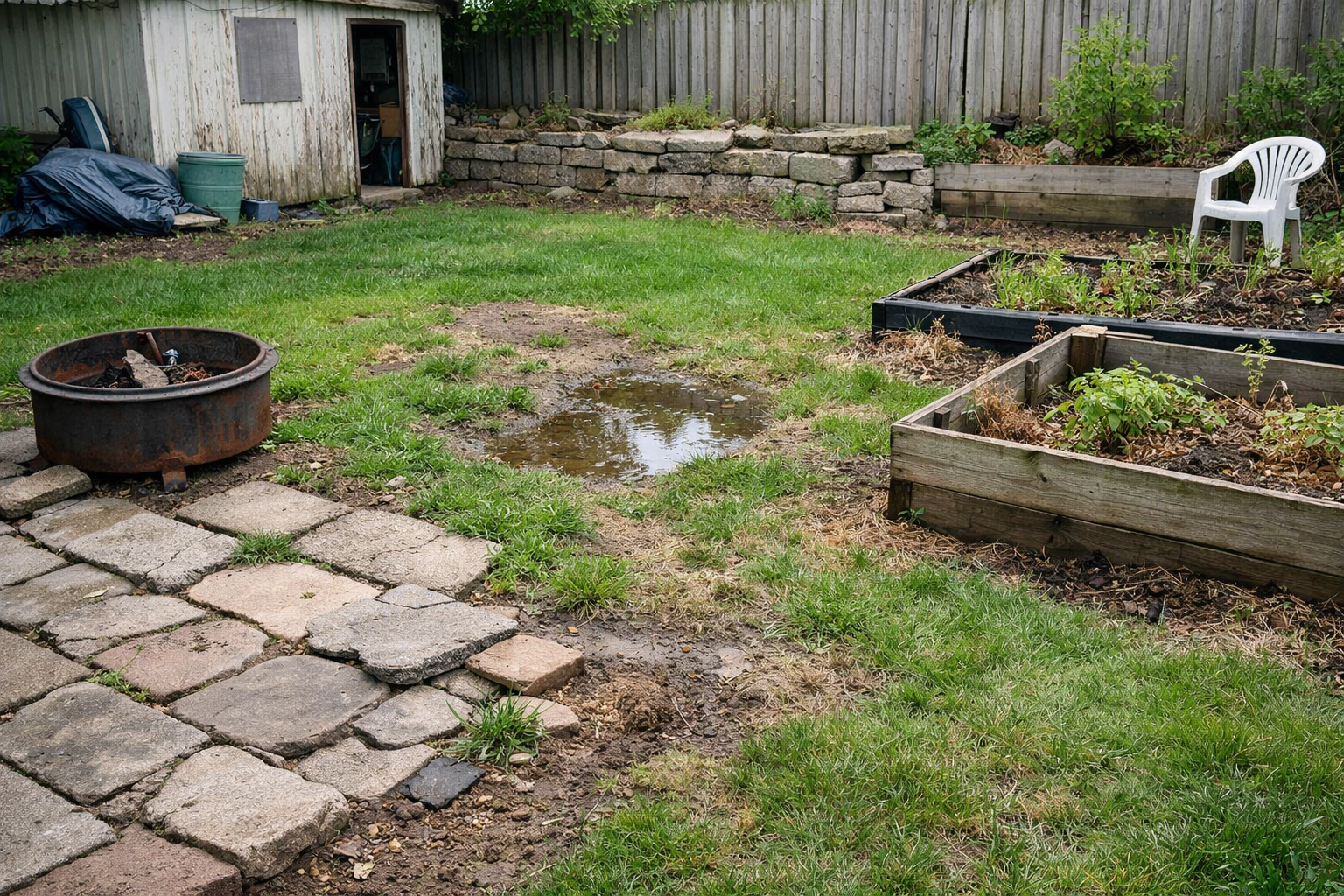
For example, installing a patio without considering slope can result in water pooling. Placing seating areas without shade or wind protection can limit usability. These problems often require costly adjustments after installation.
A well-developed plan considers how each element connects. It includes grading, drainage, material placement, and how the space will be used throughout the year. Working with a professional approach to landscaping Fergus helps ensure that the design is both functional and durable.
Mistake 2: Choosing the Wrong Materials
Material selection has a direct impact on the longevity of any landscaping project. In Fergus, materials must withstand temperature swings, moisture, and seasonal expansion. Choosing materials based only on appearance can lead to premature failure.
For instance, low-quality pavers may shift or crack after a few winters. Wood structures that are not rated for outdoor use may deteriorate quickly. Even gravel and base materials must be selected carefully to support proper drainage and stability.
Structural elements such as patios, walkways, and retaining walls require particular attention. Proper installation techniques and durable materials are essential for long-term performance. Investing in professionally planned hardscaping Fergus reduces the risk of repairs and ensures that these features remain stable over time.
Mistake 3: Ignoring Drainage and Grading
Drainage is a critical factor in landscaping success, yet it is frequently overlooked. Improper grading can cause water to collect near foundations, seep into basements, or erode soil. In Fergus, where rainfall and snowmelt are significant, these issues can escalate quickly.
Water pooling not only damages structures but also creates unhealthy conditions for lawns and plants. Saturated soil can lead to root rot, while erosion can wash away carefully installed features.
Effective drainage solutions include proper grading, the use of swales, and the installation of drainage systems where needed. Planning for water movement from the start helps protect both the landscape and the home. Addressing these concerns early prevents ongoing maintenance problems and costly repairs.
Mistake 4: Overlooking Plant Selection
Plant selection is often underestimated, yet it plays a major role in the success of a landscape. Choosing plants that are not suited to Fergus conditions can result in poor growth, increased maintenance, and frequent replacement.
Factors such as sunlight exposure, soil composition, and moisture levels must all be considered. Some plants require well-drained soil, while others thrive in moisture-retentive environments. Ignoring these needs can lead to inconsistent results across the property.
A thoughtful planting plan also considers seasonal changes and long-term growth. Without this, gardens can become overcrowded or unbalanced over time. Proper planning through garden design Fergus ensures that plant selections are appropriate for the environment and sustainable in the long term.
Mistake 5: Trying to Do Complex Projects Without Professional Help
While smaller landscaping tasks can be handled independently, complex projects often require professional expertise. Work involving grading, excavation, or structural installation must be executed precisely to avoid future issues.
DIY attempts at patios, retaining walls, or large-scale leveling can result in uneven surfaces and instability. These problems may not be immediately visible but can worsen over time. In some cases, improper installation can create safety hazards or damage nearby structures.
Professionals bring experience, proper equipment, and a clear process to the project. They understand how to prepare the base, manage drainage, and install materials correctly. This reduces the likelihood of costly mistakes and ensures that the finished landscape performs as intended.
How to Plan a Landscaping Project That Lasts
Planning a successful landscaping project in Fergus involves more than selecting features and materials. It requires a structured approach that begins with a full assessment of the property. This includes evaluating soil conditions, drainage patterns, sunlight exposure, and existing structures.
A detailed design plan should outline how each element will function together. This includes pathways, seating areas, garden beds, and structural features. Phased planning can be especially helpful, allowing homeowners to complete the project in stages while maintaining a cohesive overall design.
Long-term maintenance should also be part of the plan. Landscapes evolve over time, and planning for growth, seasonal changes, and upkeep helps preserve the original design intent.
Working with experienced professionals provides clarity and direction throughout the process. It ensures that each decision supports the overall goal of creating a durable, functional outdoor space.
If you are planning a new project or dealing with existing issues, you can request a consultation to develop a clear and effective landscaping plan.