
Why Lawn Aeration Matters in Ontario
Many lawns in Fergus and Elora experience soil compaction over time. This is especially common in Ontario because of winter snow accumulation, freeze thaw cycles, and regular foot traffic throughout the year.
During winter, the weight of snow compresses the soil surface. As temperatures fluctuate, the ground repeatedly freezes and thaws, which gradually tightens the soil structure beneath the grass. By the time spring arrives, many lawns have limited airflow and reduced water movement through the soil.
Clay heavy soils are also common throughout Wellington County. While clay soils retain nutrients well, they compact easily and can restrict root growth when not properly maintained. When soil becomes compacted, grass roots remain shallow and struggle to absorb the water and nutrients they need.
Lawn aeration is one of the most effective ways to correct this problem. By loosening the soil structure and improving root access to oxygen and moisture, aeration supports healthier turf growth throughout the season. For homeowners focusing on lawn care Fergus properties, aeration is often a foundational step toward building thicker and more resilient grass.
What Lawn Aeration Actually Does
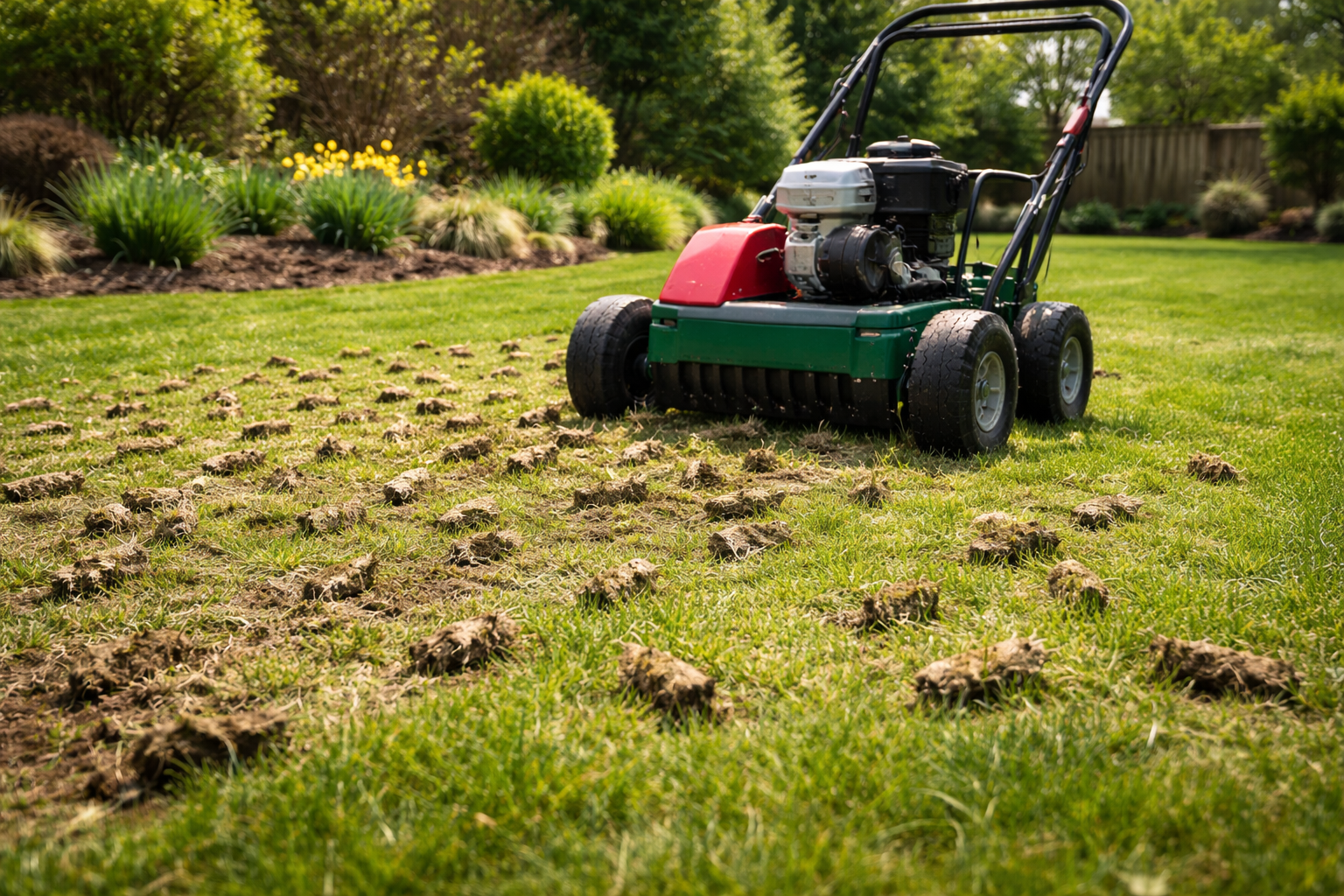
Lawn aeration improves soil health by physically removing small plugs of soil from the lawn. This process is typically performed using a core aeration machine that extracts cylindrical sections of soil and deposits them on the surface.
These small openings create channels that allow air, water, and nutrients to move deeper into the soil. As a result, grass roots can expand more easily and access the resources they need to grow stronger.
Aeration also encourages deeper root systems. When roots grow deeper into the soil, the lawn becomes more resilient during dry periods and better able to withstand environmental stress.
The soil plugs left behind may appear messy at first, but they naturally break down over time. As they decompose, they help return organic material and microorganisms to the lawn surface, which further improves soil quality.
Another important benefit is improved water absorption. Instead of pooling on the surface, rainfall and irrigation can penetrate the soil more efficiently. This reduces runoff and helps maintain consistent soil moisture levels during the growing season.
Best Time to Aerate Lawns in Fergus and Elora
Timing plays an important role in the effectiveness of lawn aeration. The process should be done when grass is actively growing so the lawn can recover quickly after the soil is disturbed.
For most lawns in Fergus and Elora, two seasonal windows provide ideal conditions for aeration.
Spring Aeration
Spring aeration is typically performed between April and early June once the soil has thawed and grass begins to grow again. This timing helps repair compaction caused by winter snow and prepares the lawn for the active growing season ahead.
Spring aeration can also improve the effectiveness of fertilization and overseeding treatments. With the soil opened up, nutrients and grass seed can reach deeper into the root zone where they are most beneficial.
Homeowners who are planning spring lawn care Ontario programs often include aeration as an early season treatment to strengthen turf growth.
Fall Aeration
Fall is another excellent time to aerate lawns in this region. Early autumn typically provides cooler temperatures and consistent soil moisture, which allows grass roots to grow without the stress of summer heat.
Many lawn care professionals consider fall aeration especially effective because it strengthens the root system before winter arrives. A stronger root system helps the lawn recover more quickly the following spring.
Both spring and fall aeration can benefit lawns depending on their condition and the overall maintenance plan.
Signs Your Lawn Needs Aeration
Several visible indicators can suggest that your lawn would benefit from aeration.
Water Pooling After Rain
If water collects on the surface of the lawn after rainfall instead of soaking into the soil, compaction may be preventing proper drainage.
Hard or Compacted Soil
When the ground feels firm or difficult to penetrate with a garden tool, the soil may be too compact for healthy root growth.
Thin or Patchy Grass
Areas where grass struggles to grow evenly may indicate that the roots are not receiving enough oxygen or nutrients.
Heavy Foot Traffic
Lawns that receive frequent activity from pets, children, or outdoor gatherings tend to compact faster. High traffic areas often benefit the most from aeration.
Slow Lawn Recovery
If the lawn takes longer than expected to recover after winter or summer stress, compacted soil may be limiting its ability to regenerate.
Recognizing these signs early allows homeowners to improve soil conditions before lawn health declines further.
What Happens If You Skip Aeration
Without aeration, soil compaction gradually becomes worse over time. Grass roots remain shallow and cannot expand into deeper layers of soil.
Shallow root systems make the lawn more vulnerable to heat, drought, and nutrient deficiencies. During dry periods, compacted lawns may struggle to retain moisture, causing grass to become thin or discoloured.
Compacted soil also creates an environment where weeds can spread more easily. Weeds often thrive in stressed turf areas where grass struggles to establish strong coverage.
Over time, these conditions may lead to uneven growth, thinning turf, and increased maintenance challenges. Regular aeration helps prevent these long term issues by maintaining healthy soil structure.
Professional Lawn Care vs DIY Aeration
Some homeowners attempt to aerate their lawns using rental equipment or handheld tools. While these options can provide some results, they often do not deliver the same level of effectiveness as professional aeration services.
Professional aeration machines are heavier and designed to extract deeper soil plugs consistently across the entire lawn. This produces more noticeable improvements in soil structure and root growth.
Rental equipment may struggle with compacted clay soils or uneven terrain. If the plugs are shallow or inconsistent, the benefits of aeration may be limited.
Professional lawn care providers also evaluate the condition of the lawn before performing aeration. They can recommend additional treatments such as overseeding or fertilization to maximize the results.
Homeowners interested in improving turf health throughout the season often explore professional lawn care services that include aeration as part of a comprehensive maintenance program.
Preparing Your Lawn for the Growing Season
After aeration, several maintenance steps can help the lawn recover and grow more effectively.
Proper mowing practices are one of the most important factors. Grass should be maintained at an appropriate height to protect the root system and encourage dense turf growth. Regular mowing schedules are often maintained through professional grass cutting services that help keep lawns healthy throughout the growing season.
Watering also supports recovery after aeration. Adequate moisture allows grass roots to expand into the newly opened soil spaces created during the aeration process.
Fertilization and overseeding may also be recommended depending on the condition of the lawn. These treatments help strengthen turf density and fill in areas where grass may be thinning.
Many homeowners combine aeration with broader seasonal services that maintain the entire property. Ongoing property maintenance programs can help ensure lawns, gardens, and outdoor spaces continue to improve throughout the year.
Scheduling Lawn Aeration in Fergus and Elora
Lawn aeration is a valuable step in maintaining healthy turf across Fergus and Elora properties. By reducing soil compaction and improving root access to oxygen and nutrients, aeration helps lawns grow thicker and more resilient.
When performed at the right time of year, aeration supports stronger root systems and better overall lawn performance. Addressing soil health early in the season can also help prevent long term problems such as thinning grass and weed growth.
Homeowners who notice compact soil, slow growth, or uneven lawn coverage may benefit from professional aeration services.
You can schedule lawn aeration services to assess your lawn conditions and prepare your property for a healthier growing season.