
Why Fall Is the Time to Investigate Yard Drainage Problems
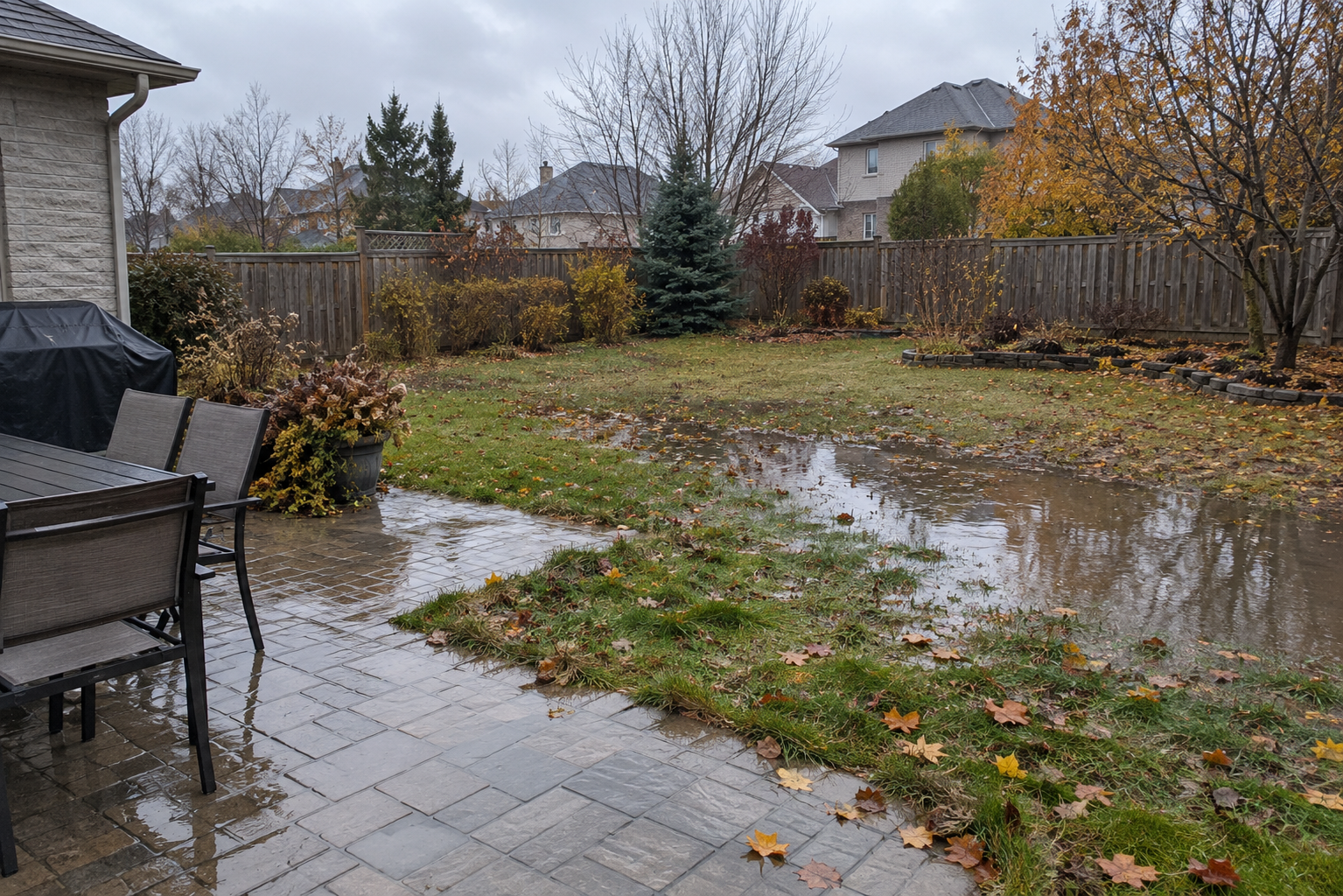
Fall drainage problems are easy to overlook when standing water disappears between rainstorms. However, recurring puddles, saturated lawns, and water collecting near patios or foundations can indicate underlying drainage conditions that deserve attention before winter.
For homeowners in Fergus and Elora, Ontario, autumn provides an opportunity to observe how water moves across a property before freezing temperatures make investigation and corrective work more difficult.
When the ground freezes, existing drainage problems can become more complicated. Water trapped in soil or beneath paved surfaces can expand as it freezes, potentially contributing to ground movement, uneven surfaces, and landscape deterioration. During winter thaws and early spring, melting snow can also collect in areas where water cannot drain effectively.
Not every wet area requires major work. The important step is recognizing warning signs and identifying whether routine maintenance, grading improvements, or further professional assessment is appropriate.
Here are five drainage concerns homeowners should investigate before the ground freezes.
1. Standing Water That Remains After Rainfall
Temporary puddles are common during heavy autumn rainfall, especially when the soil is already saturated. The concern begins when water repeatedly collects in the same locations or remains long after surrounding areas have dried.
Persistent standing water may indicate compacted soil, uneven grading, or an obstruction that prevents surface runoff from moving away naturally.
Homeowners can begin by observing three conditions:
- Location: Does water consistently collect in the same low area?
- Duration: Does pooling remain for a day or longer after ordinary rainfall?
- Frequency: Does the problem return after most rainstorms rather than only during unusually heavy rainfall?
These observations can help distinguish temporary wet conditions from poor lawn drainage that requires investigation.
Standing water near buildings, walkways, and frequently used lawn areas deserves particular attention. As temperatures fluctuate around freezing, accumulated moisture can create slippery surfaces and contribute to deterioration of surrounding landscape materials.
2. Poor Grading That Sends Water Toward Your Home
Yard grading determines how surface water travels across a property. Ideally, the landscape directs rainfall and snowmelt away from buildings and toward suitable drainage areas.
When a lawn slopes toward a house, garage, or patio, water may collect against vulnerable surfaces. Depressions in the yard can also trap runoff rather than allowing it to move naturally.
Common grading concerns include uneven lawn elevations, low areas beside foundations, and soil settlement that changes the original direction of surface drainage.
These conditions can become more noticeable in fall when rainfall increases and evaporation slows. Once temperatures drop, frozen ground may limit infiltration, leaving water to travel across the surface or collect in existing depressions.
Improving yard drainage in Fergus may involve evaluating surface elevations, correcting localized low spots, or adjusting landscape slopes where appropriate.
For properties with recurring runoff concerns, professional landscaping can help homeowners explore practical grading and landscape improvements based on the existing property conditions.
Water consistently collecting against a foundation should receive appropriate professional assessment before corrective work is planned.
3. Drainage Problems Around Patios and Walkways
Patios and walkways depend on properly prepared foundations and effective water movement to maintain stable surfaces.
When drainage is inadequate, water can accumulate beside paved areas or become trapped within the materials beneath them. Over time, settlement or repeated freeze-thaw cycles may contribute to uneven pavers, shifting joints, and localized surface movement.
Homeowners should watch for puddles that repeatedly form along patio edges, sinking interlock sections, and walkways where water flows toward the house instead of away from it.
A small depression may appear to be a surface issue, but the cause could involve underlying settlement, slope, or drainage conditions.
Before winter, an assessment can help determine whether an affected area requires localized adjustment or more extensive corrective work.
Garafraxa Turf’s hardscaping services provide a relevant starting point for homeowners evaluating patio and walkway conditions. Understanding the cause of recurring water accumulation is important before choosing a repair approach.
Addressing the underlying problem is generally more effective than repeatedly levelling individual pavers without investigating why movement is occurring.
4. Saturated Lawn Areas That Never Seem to Dry
A lawn that remains muddy or unusually soft after nearby areas have dried may be experiencing persistent moisture retention.
Compacted soil can limit how readily water enters and moves through the ground. Low areas, unsuitable soil conditions, and restricted surface drainage can also cause moisture to remain concentrated in certain sections of the yard.
Repeated saturation can weaken turf, restrict healthy root development, and leave grass vulnerable to wear. These problems may become more noticeable in spring when melting snow adds moisture to soil that is already wet.
Homeowners sometimes respond by applying additional lawn treatments or reseeding damaged areas. While those measures may improve turf health under suitable conditions, they do not necessarily resolve the reason excess water is accumulating.
For example, aeration may help relieve certain types of soil compaction, but it will not correct a significant grading problem that continuously directs water into a low section of lawn.
Before investing in repeated lawn repairs, identify whether the problem originates from soil conditions, surface elevations, or another source of water accumulation.
This approach helps homeowners avoid treating visible lawn damage while leaving the drainage issue unresolved.
5. Blocked Drainage Paths and Water Collection Areas
Autumn leaves, sediment, and landscape debris can interfere with existing drainage routes.
Surface channels, visible outlets, and water collection areas may become obstructed as leaves accumulate through October and November. When these routes are blocked, rainfall can be redirected into areas where it would not normally collect.
Some drainage concerns are relatively straightforward. Removing accessible debris from an existing surface drainage path may restore normal water movement without requiring additional corrective work.
Other situations require closer investigation.
If water continues collecting after visible obstructions have been removed, the issue may involve inadequate slopes, recurring sediment buildup, or drainage conditions that routine cleaning cannot resolve.
Homeowners should avoid disturbing buried drainage components or attempting major modifications without understanding the existing system.
The priority is determining whether the problem results from temporary blockage or a more persistent drainage limitation.
Which Drainage Problems Need Professional Attention Before Winter?
Not every puddle requires professional correction. The appropriate response depends on where water collects, how frequently the problem occurs, and whether surrounding landscape features are affected.
Routine maintenance may be sufficient when leaves or debris temporarily obstruct an accessible surface drainage route, or when minor puddles appear only after unusually heavy rainfall and disappear as the soil dries.
Further investigation is appropriate when standing water repeatedly forms in the same location, grass remains saturated for extended periods, or runoff moves toward buildings and paved surfaces.
Professional assessment becomes more important when recurring drainage problems are accompanied by visible settlement, shifting patio materials, significant grading concerns, or water accumulating close to a foundation.
Ongoing property maintenance services can help homeowners identify developing landscape concerns and determine when routine upkeep may no longer be sufficient.
For drainage problems involving complex site conditions or potential building-related concerns, an assessment by an appropriately qualified professional may be necessary before selecting corrective measures.
The goal is not to recommend unnecessary work. It is to identify the cause of persistent moisture and choose a response appropriate to the property’s conditions.
Protect Your Fergus or Elora Property Before the Ground Freezes
Fall drainage problems should be evaluated before freezing temperatures limit access to saturated soil and complicate outdoor improvements.
For homeowners in Fergus and Elora, recurring puddles, poor grading, saturated grass, and water collecting around patios are all reasons to examine how moisture moves across the property.
Early investigation does not guarantee that every winter drainage problem or freeze-thaw effect can be prevented. However, understanding the source of water accumulation can support more informed maintenance decisions and help reduce avoidable landscape damage.
Rather than repeatedly treating muddy areas or uneven surfaces, focus on identifying the underlying drainage conditions.
Request a property assessment to identify drainage concerns before winter. To discuss recurring drainage problems and determine appropriate next steps, contact Garafraxa Turf.